
CRAFTSMANSHIP
Made by hands that respect time.
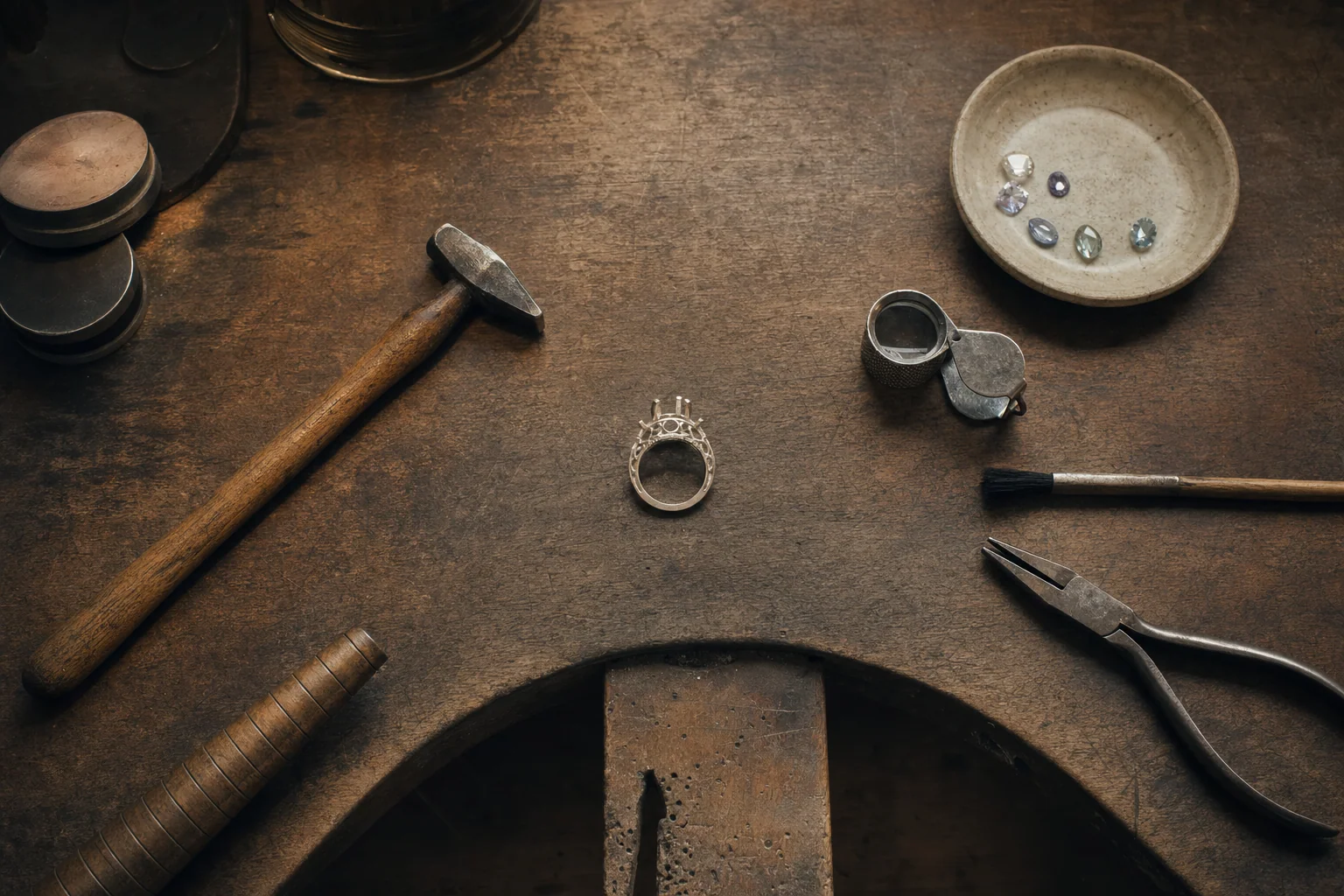
A ring is not printed at ÊTRUNE. It is drawn, shaped, cast and set across weeks — by people whose hands have learned, over years, what each material asks for. The slowness is the point. The slowness is the guarantee.
STAGE BY STAGE
How a ring is made.
- 01
References
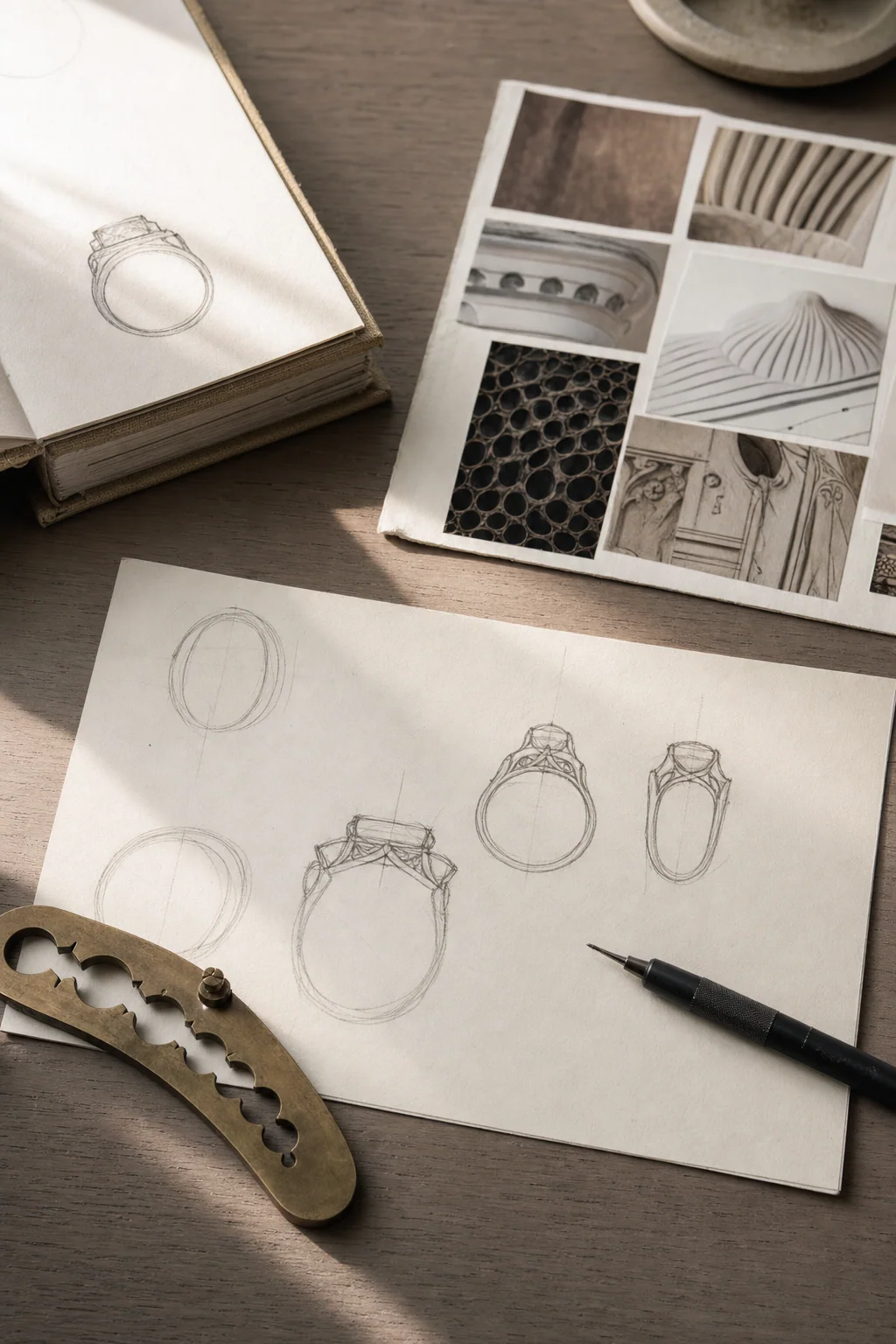
A piece begins as a theme — sometimes a stone, sometimes an emotional cue from the customer. We gather references that capture the feeling before any line is drawn.
- 02
Sketching
On paper, considering the materials, the way each metal moves under heat, the way each stone holds a setting. The sketch is not a render — it is a conversation between hand and brief.
- 03
Stylisation
The line that survives is refined: thickness, proportion, the gentle architecture that gives a ring its silhouette. Decisions here cannot be undone later.
- 04
3D modelling
The sketch is rebuilt as a precise digital model. Stone seats are calibrated to the millimetre, prongs to the angle, the band to the curve of an average hand at the agreed size.
- 05
Casting in lost wax
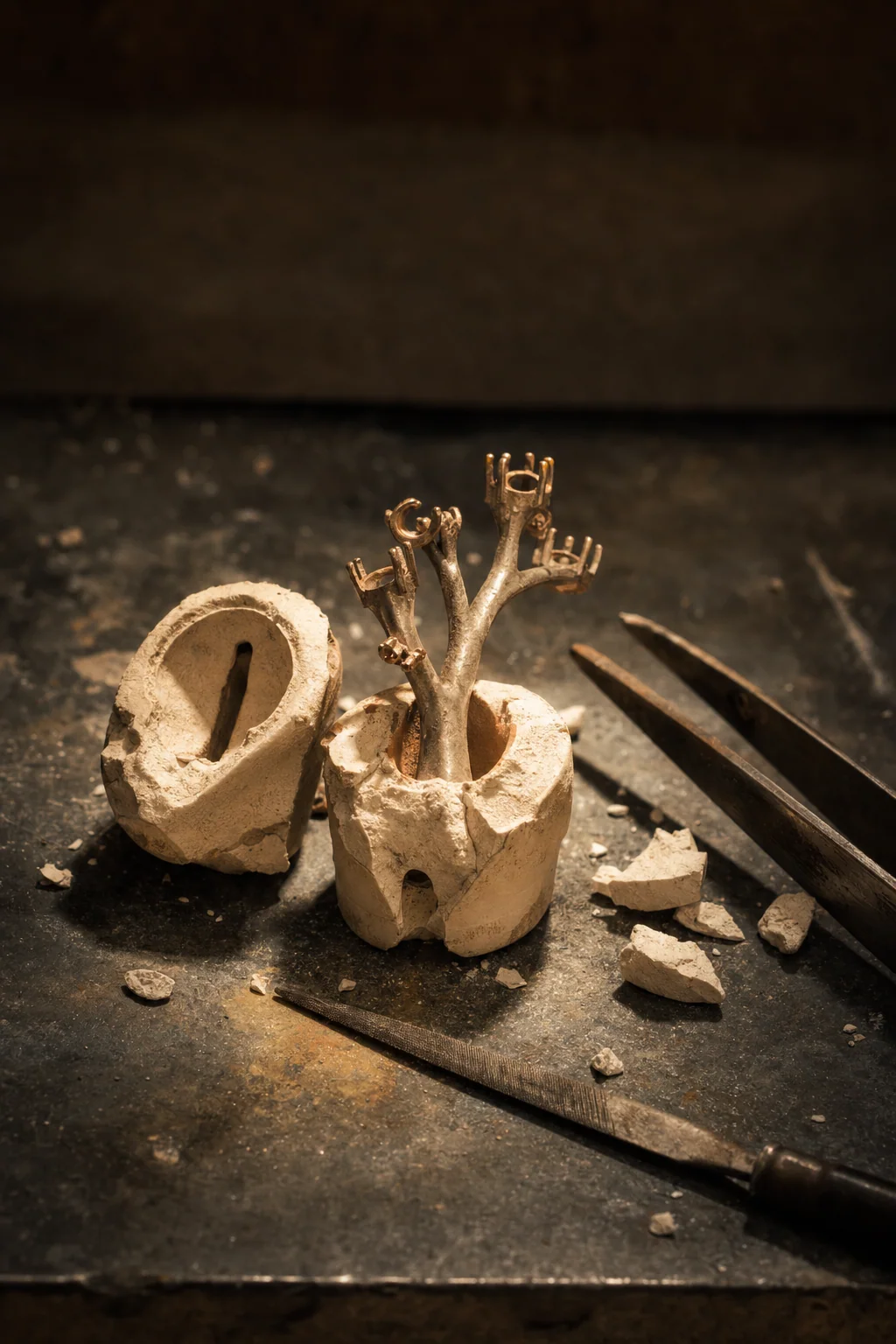
The digital model is grown in wax, surrounded by investment, and the wax is burned out to leave the mould. Molten metal — gold, platinum — fills what the wax left behind. The ring exists for the first time.
- 06
Finishing and setting
A certified master jeweller polishes the band by hand and sets the centre stone. Every facet of the gem is checked under loupe. The piece is documented and assigned its ÊTRUNE ID.
The atelier and its allies.
Design, modelling and quality control happen in-house. Casting and final finishing are entrusted to a small circle of certified master ateliers, chosen because their hands have been doing this for longer than ours — and because, at the scale of fine jewellery, the best work is rarely done alone.
Every piece passes back through our hands before it is documented. The certification, the photograph for the record, and the assignment of an ÊTRUNE ID happen here, in the maison, never outsourced.
Materials with provenance.
Every gemstone is sourced from origins we can document — Madagascar for teal sapphire, Afghanistan for indicolite tourmaline, Brazil and Tanzania for the rare colour-change material that finds its way into our finest pieces. The certificate of the stone travels with the ring and is preserved in the ÊTRUNE ID.
Metals are certified ethical, sourced from refiners who can show the chain back to the mine or the recycling stream. None of this is unusual in fine jewellery. What is unusual is showing the customer the receipts.
Time is part of the price.
A custom piece takes the time it takes — typically several weeks between approval and delivery. There is no express service, because there is no shortcut that does not show. The weeks are the warranty.
The customer who chose to wait will own a piece that does not look like anyone else’s and that the atelier can defend with confidence for decades. The customer who could not wait would have been better served elsewhere.
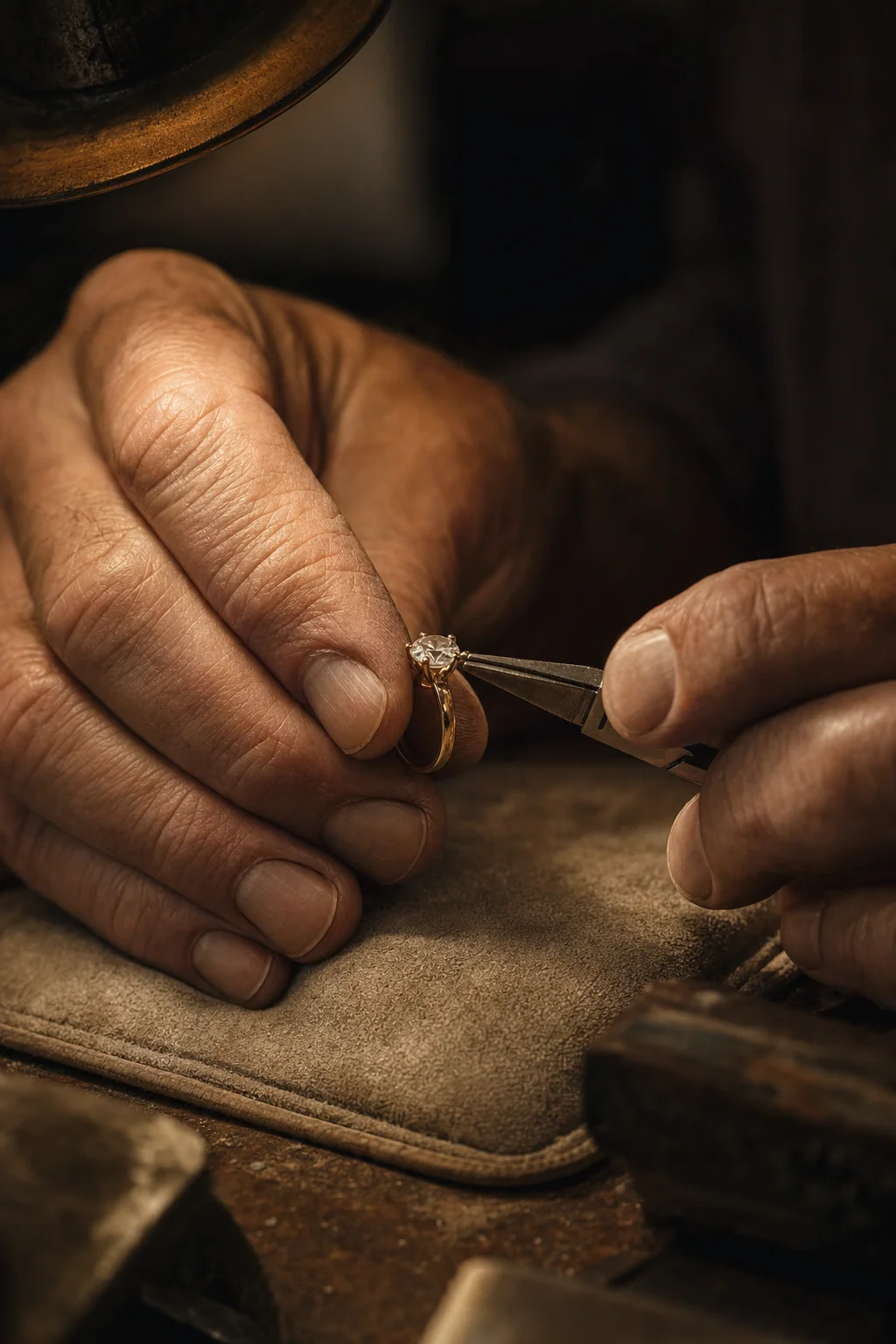
“The slowness is not a delay. It is the warranty written in time instead of paper.”
Begin a piece worth the weeks it will take.
Start with a gemstone, a sketch, or a feeling. We shape the rest.