
trust
The Sparkle of Integrity: How International Certifications Guarantee Quality and Sustainability
A walk through the certification stack behind a serious engagement ring — gemological labs, origin reports, responsible-sourcing frameworks, and the atelier-level documentation that ties them together.
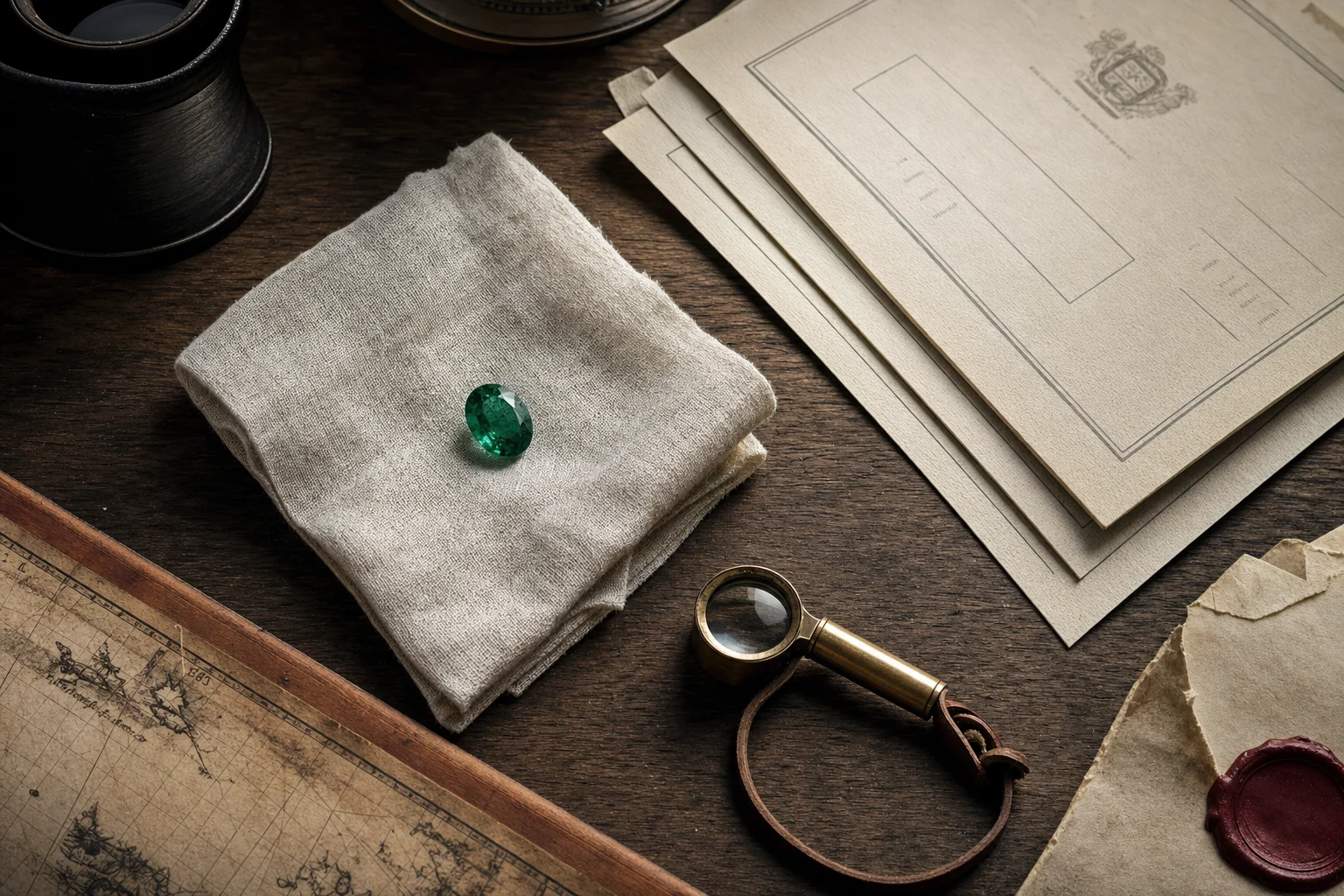
A fine engagement ring is the visible end of an invisible chain. Behind the stone in the setting is a sequence of laboratories, mining standards, customs declarations, and atelier records that together tell the piece’s story — what the stone is, where it came from, how it was treated, and through whose hands it has passed. This article walks through that chain. It explains the certifications a serious wearer should expect to see, what each one actually verifies, and what they don’t say. It also explains why, in our practice, the lab certificates are necessary but not sufficient — and why the atelier’s own documentation closes the gap.
Two questions that certifications answer
When a wearer asks “what proves this ring is what you say it is?” the answer falls into two questions:
- What is the gemstone? Its species, its origin, its treatments, its quality grade.
- How was it sourced? Its journey from mine to setting, and whether that journey met responsible-sourcing standards.
Different certifications answer different questions. A serious commission will produce a stack of documents that, together, answer both.
The gemological labs
The first layer is the gemological laboratory report. These are the documents that identify the stone scientifically.
GIA (Gemological Institute of America) is the most widely recognised lab in the diamond trade and increasingly active in coloured stones. A GIA report for a diamond will state carat, cut, colour, clarity, and proportions. For a coloured stone, the report will state species (sapphire, ruby, emerald), variety, colour description, weight, dimensions, and any treatments detected.
SSEF (Swiss Gemmological Institute) in Basel is widely considered the highest authority for coloured stones, particularly for origin determination on rubies, sapphires, and emeralds. An SSEF report on a Burmese ruby or a Kashmir sapphire is a significant piece of documentation — and increasingly required for high-value pieces.
Gübelin Gem Lab in Lucerne shares that authority and is often paired with SSEF for cross-verification on important stones. Gübelin’s origin reports are particularly respected for emeralds.
AGL (American Gemological Laboratories) in New York is the most respected American lab for coloured stones, with a strong reputation for clear treatment disclosure.
A serious coloured gemstone of meaningful value should carry at least one report from one of these labs. For exceptional stones, two reports from independent labs is increasingly the standard.
What the lab reports actually verify
The reports state, with scientific precision, what the stone is. Specifically:
Species and variety. That the green stone in the ring is, in fact, an emerald (beryl with chromium) and not a green tourmaline or a green sapphire. That the red stone is a ruby (corundum with chromium) and not a red spinel.
Weight and dimensions. Measured to the hundredth of a carat and to the tenth of a millimetre.
Origin (when offered). For sapphires, rubies, and emeralds, the major labs can determine geographic origin from inclusions, trace elements, and spectroscopic signatures. This is not infallible but it is rigorous; the labs are conservative about origin calls.
Treatments. Whether the stone has been heated, oiled (for emeralds), filled, irradiated, or otherwise enhanced. Treatments are not necessarily disqualifying — most rubies and sapphires are heated, and most emeralds are oiled — but they must be disclosed because they affect value substantially.
Quality assessment (for diamonds). The Four Cs in formal grading.
What the lab reports do NOT verify
This is the part most clients miss. Lab reports certify the stone as a physical object; they do not certify its sourcing.
A GIA report on a ruby will tell you it is a 2.34 ct Burmese ruby, no heat. It will not tell you whether the ruby was mined in compliance with international sanctions, whether the miners were paid fairly, or whether the export documentation was complete. The lab is testing the gem, not its history.
For sourcing claims, a separate layer of documentation is required.
The responsible-sourcing frameworks
This is where the second question — “how was it sourced?” — gets answered. The frameworks vary by stone type.
Diamonds: The Kimberley Process. Established in 2003 to prevent the trade in conflict diamonds, the Kimberley Process requires that rough diamonds crossing borders be accompanied by a certificate stating they are conflict-free. The scheme has well-documented limitations — it defines “conflict” narrowly and does not address labour conditions, environmental impact, or non-state conflicts — but it remains the baseline international framework.
Diamonds: Beyond Kimberley. More rigorous standards exist. The Responsible Jewellery Council (RJC) certifies members against a Code of Practices covering human rights, labour, environment, and business ethics. De Beers’ Tracr platform offers blockchain-backed provenance for diamonds from rough to polished. Maendeleo Diamond Standards specifically addresses artisanal mining ethics.
Coloured stones: harder, but improving. The coloured-stone supply chain is structurally more fragmented than diamonds — most coloured stones come from artisanal and small-scale mining, often in countries with limited regulatory infrastructure. Certifications here are less standardised. The most credible frameworks include:
- Gemstones and Jewellery Community Platform (formerly CIBJO), the international confederation that sets industry standards.
- Moyo Gemstones, for Tanzanian coloured stones with traceable artisanal sourcing.
- Fair Trade Gems, a smaller but rigorous certification for selected mining cooperatives.
- Direct sourcing relationships, where the atelier itself maintains documented relationships with specific mines or cooperatives and can certify the chain.
For Colombian emeralds specifically — central to our practice — direct sourcing from Muzo, Coscuez, or Chivor with verifiable export documentation is the standard above generic certification schemes.
The atelier’s role: closing the gap
Lab reports certify the stone. Sourcing frameworks certify the supply chain in aggregate. But neither tells the wearer the specific story of their specific ring. That gap is closed by the atelier’s own documentation.
In our practice, the ÊTRUNE ID record for each piece includes:
- The lab report (or reports) on the centre stone, attached as a digital file.
- The chain of custody from extraction or import through the atelier, with documents at each handoff.
- The treatment history of the stone, even when not strictly disclosable on the lab report.
- The metal source and refining documentation.
- The atelier’s own statement of work — who designed the piece, who set the stone, when each step happened.
This is not certification in the formal sense. It is documentation. But for the wearer, documentation is what makes the certification useful — it ties the abstract paperwork to the specific object they wear on their finger.
What “sustainable” actually means
The word “sustainable” is used loosely in jewellery, often to the point of meaninglessness. In our use, it refers to specific, documented practices:
Mined stones with verifiable provenance. Not “ethically sourced” as a marketing phrase, but with the export documentation, the mine of origin, and the chain of custody on file.
Refined metal with documented refinery. The gold and platinum in our pieces come from refineries that meet either the London Bullion Market Association’s Responsible Gold Guidance or equivalent. Recycled metal where appropriate; primary metal when the refining standards meet our threshold.
Atelier practices with documented standards. Our own workshop’s environmental and labour practices are part of the audit, not just our suppliers’.
Pieces designed to outlast their owners. The most sustainable engagement ring is the one that does not need to be replaced, repaired catastrophically, or melted down. +Care is part of the sustainability story.
The word “sustainable” alone is empty. The documented practices behind it are not.
What a complete document stack looks like
For a serious engagement ring commissioned through a serious atelier, the wearer should receive at minimum:
- Lab report on the centre stone from GIA, SSEF, Gübelin, or AGL (depending on stone type and value).
- Atelier statement of work with date of completion, designer, setter, and quality control sign-off.
- Provenance documentation for the stone, traceable to mine or import.
- Metal sourcing statement referencing the refinery.
- ÊTRUNE ID (or equivalent digital record) consolidating all the above into a single accessible record.
- Care documentation explaining the maintenance commitments.
This stack is not optional for fine pieces. It is the proof that the commission is what it claims to be.
Why this matters more than the marketing
Most jewellery marketing operates on assertion: a piece is described as “ethical” or “sustainable” or “world-class” and the wearer is asked to trust the brand. The certifications and documentation described above replace assertion with evidence.
The wearer who has the document stack does not need to trust the brand. They can verify. And a brand that produces documentation of this depth has a different relationship with its wearers than one that does not — because the brand is exposing itself to scrutiny, repeatedly, deliberately.
A short reference
- Two questions: what is the gemstone, and how was it sourced.
- Major gem labs: GIA, SSEF, Gübelin, AGL — each rigorous, each conservative on origin calls.
- Diamond sourcing: Kimberley Process baseline; RJC and Tracr above it.
- Coloured stone sourcing: less standardised; direct sourcing relationships matter most.
- Atelier documentation closes the gap between lab certification and the specific story of the specific piece.
- “Sustainable” means documented practices, not marketing language.
A ring that carries this stack of documentation carries its own argument. It is sparkling not just from cut and clarity, but from the integrity of everything behind it.